In Tempe, your air conditioner is not a convenience during the summer; it is essential. When afternoon highs sit between 110 and 115 degrees for weeks at a time, the system runs almost constantly, and that relentless load is exactly when a neglected unit tends to quit. The encouraging part is that most summer breakdowns are preventable.
A handful of simple habits and one well-timed professional visit keep your system reliable through the worst of the heat. This guide covers practical ways to prevent an AC breakdown in Tempe, and when it is worth calling for AC repair before a small issue becomes a no-cool afternoon.
Why Do AC Systems Struggle in Tempe’s Summer Heat?

Few climates push an air conditioner harder than the Arizona desert. Through June, July, and August, your system may run 12 to 18 hours a day, fighting triple-digit heat that barely eases after sunset. Attic temperatures can climb past 140 degrees, radiating heat back into the home and forcing the equipment to work even harder.
Dust is the other constant. Blowing desert dust and monsoon-season haboobs coat condenser coils and load up filters far faster than in a milder climate. Combine nonstop runtime, extreme heat, and fine dust, and every weak component is exposed.
That is why the systems that fail in July are almost always the ones that went into summer without basic upkeep. A little prevention goes a long way here.
Change the Air Filter on a Desert Schedule
In much of the country, a filter lasts a few months. In Tempe’s dust, it loads up far faster, and a clogged filter is one of the most common reasons an AC struggles in the heat. As the filter packs with fine dust, airflow drops, the system runs longer, and the evaporator coil can even freeze, which leaves the home warm despite the unit running nonstop.
The simple fix is to check the filter every 30 days during the cooling season and replace it whenever it looks gray and loaded, which in heavy dust or monsoon weeks can be monthly or sooner.
A clean air filter is the cheapest insurance you have against a mid-summer breakdown, and it protects the blower and coil from strain that shortens their life.
Keep the Outdoor Condenser Clean and Clear

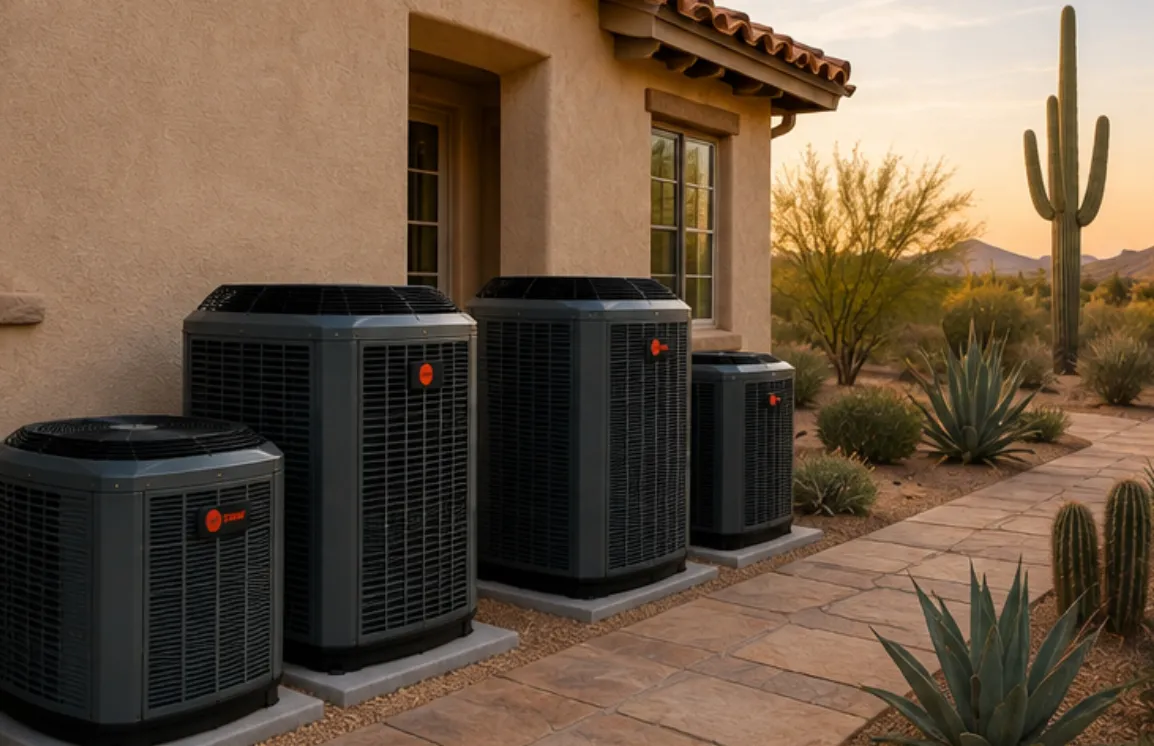
The outdoor condenser releases the heat your AC pulls from the house, and it cannot do that job when it is caked in desert dust. After a dust storm, the coil fins can clog enough to trap heat against the unit, which raises operating pressures, strains the compressor, and drives up your APS or SRP bill as the system works harder for less cooling.
You can help between professional visits. Keep at least two feet of clearance around the unit, trim back any plants, and gently rinse the coil fins with a garden hose from the inside out after a heavy dust event. Avoid pressure washers, which bend the delicate fins. A condenser that can breathe runs cooler, lasts longer, and is far less likely to fail during a heat wave.
How Can You Help Your AC Keep Up on the Hottest Days?
When temperatures reach 110°F or higher, even a properly functioning AC system can spend most of the afternoon running continuously. The goal is not to make the system work harder. It is to reduce unnecessary heat gain inside the home.
A few practical habits can make a noticeable difference:
- Keep blinds and curtains closed on west-facing windows during peak afternoon sun.
- Avoid using ovens, dryers, and other heat-producing appliances between 2 PM and 7 PM.
- Use ceiling fans to improve comfort without lowering the thermostat.
- Keep interior doors open to promote balanced airflow.
- Avoid drastic thermostat setbacks that force the system to recover during the hottest part of the day.
These small AC adjustments reduce strain on the equipment and help maintain more consistent indoor temperatures during extreme heat events.
Catch the Early Warning Signs Before a Full Breakdown
An air conditioner rarely fails without notice. Most no-cool calls in Tempe started days earlier as a small change the homeowner noticed but did not act on. Treating these early signs as a reason to call usually turns a minor repair into a quick fix rather than an emergency:
- Weak Airflow: Vents pushing less air often mean a clogged filter or failing blower.
- Warm Air: Cool but not cold air can signal low refrigerant or a dirty coil.
- Longer Run Times: A system that never cycles off is straining to keep up.
- Strange Noises: Buzzing or clicking at the unit can point to a weak capacitor.
- Rising Bills: A jump with no change in use signals lost efficiency somewhere.
Acting on any of these early problems protects the compressor, the most expensive part in the system, and keeps a small problem from becoming a hot, expensive afternoon.
Get a Professional Tune-Up Before Peak Summer

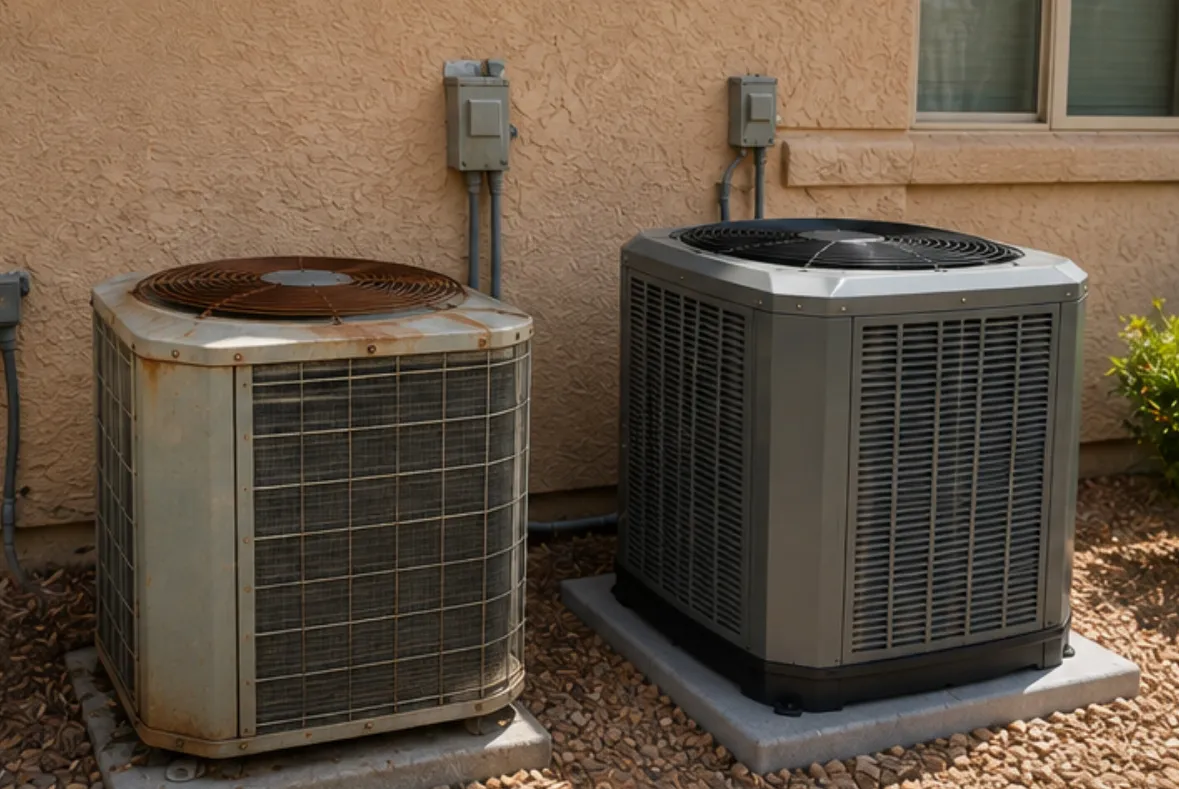
The single most effective way to prevent a breakdown is a professional tune-up in spring, before the first real heat arrives. During a visit, a technician checks refrigerant charge, tests the capacitor and contactor, cleans the coils, verifies airflow, and clears the condensate drain, catching the worn parts that tend to fail under a full summer load. A weak capacitor found in April is a simple replacement, while the same part failing in July is an emergency call.
Timing matters because once the heat sets in, every HVAC company in the East Valley books up fast. Scheduling professional AC maintenance early means the work gets done on your terms, and it is the clearest way to head off the breakdowns that cluster during the hottest weeks. If the tune-up does turn up a worn part, prompt AC repair keeps it from cascading into a larger failure.
How Often Should You Service an AC in the Desert?
Desert climates require a more proactive maintenance schedule than most parts of the country. Between extreme temperatures, airborne dust, and monsoon-season debris, waiting until something feels wrong often means the system has already been under strain for weeks.
| Task | Recommended Frequency |
|---|---|
| Check the air filter | Every 30 days in cooling season |
| Replace the air filter | Every 1 to 2 months in heavy dust |
| Rinse the outdoor condenser | After major dust storms |
| Professional tune-up | Once a year, ideally in spring |
| Full system inspection | Annually, before peak summer |
Sticking to this schedule does more than prevent breakdowns. Regular maintenance service from a trusted HVAC contractor helps catch small issues before they become costly summer repairs, keeping your AC reliable, efficient, and ready for Tempe’s extreme heat.
Why Choose Accurate Air for AC Service in Tempe, AZ

In Tempe, most summer AC failures do not happen without warning. They usually start with longer cooling cycles, restricted airflow, rising utility bills, or components struggling under weeks of extreme heat. Catching those signs early is often the difference between a routine service visit and a no-cool emergency during a 115-degree afternoon.
Since 1965, Accurate Air has helped East Valley homeowners prepare their systems for Arizona’s demanding summers. Whether you need preventative AC maintenance or prompt AC repair, our technicians focus on identifying problems before they lead to costly breakdowns.
If your AC system is working harder than it should or summer temperatures are already exposing weaknesses, now is the time to have it evaluated before peak heat puts even more stress on the equipment.