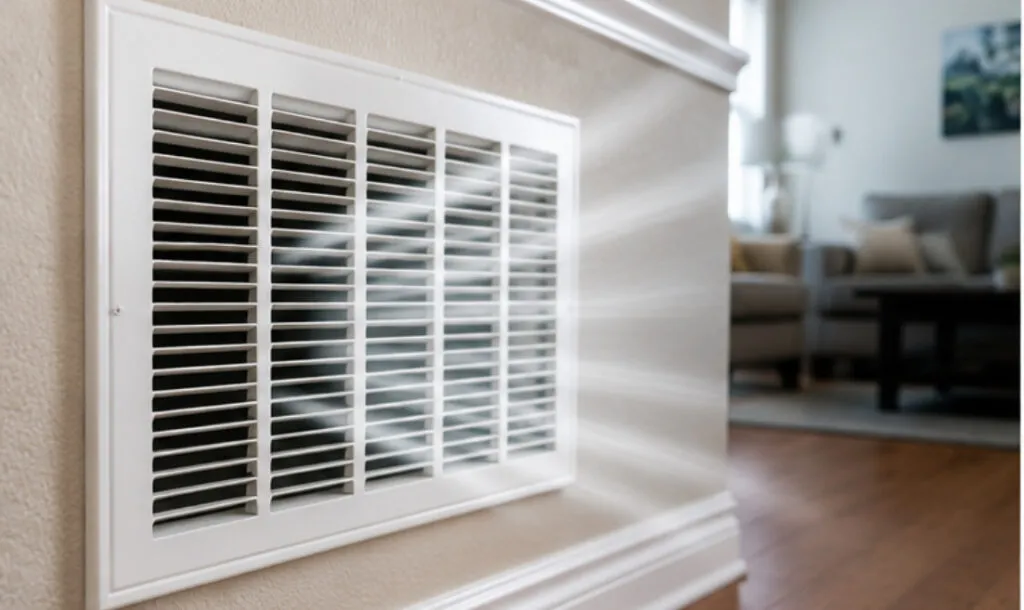
If your AC return vent sounds like it’s roaring every time the system turns on, it’s usually more than a minor annoyance. While some airflow noise is normal, loud whistling, humming, or rushing air often points to an airflow problem inside your HVAC system. In Mesa, where air conditioners can run for 10 to 14 hours a day during the summer, these issues become much more noticeable.
Many homeowners assume the return vent itself is the problem, but that’s rarely the case. In most homes, excessive noise is caused by restricted airflow, high static pressure, or ductwork that isn’t moving enough air back to the system. Identifying the cause early can improve comfort, reduce unnecessary strain on your equipment, and help prevent expensive repairs down the road.
Why Is Your AC Return Vent So Loud?
A return vent becomes loud when your HVAC system has to pull air through a restriction. Instead of moving air smoothly back to the air handler, the blower works harder to overcome resistance, creating loud rushing, whistling, humming, or even vibrating sounds around the return grille. While the noise may seem to come from the vent itself, it’s usually a symptom of an airflow problem elsewhere in the system.
During Mesa’s triple-digit summers, air conditioners often run 10 to 14 hours a day, making these airflow problems much more noticeable. Longer cooling cycles increase the amount of air moving through the return duct, so even minor restrictions can produce louder noise than homeowners notice during milder weather.
If the return vent has become louder over time, don’t assume it’s simply because the AC is working harder. In many cases, the noise is an early warning sign of restricted airflow, high static pressure, or ductwork problems that should be corrected before they begin affecting cooling performance or lead to unnecessary AC repair.
What Causes High Static Pressure Inside Your HVAC System?
High static pressure is one of the most common reasons an AC return vent becomes unusually loud. As airflow becomes restricted, the blower has to work harder to pull air through the return side of the system. The added resistance increases airflow noise, reduces cooling efficiency, and places extra strain on HVAC components, especially during Mesa’s long summer cooling season.
Dirty Air Filters Restrict Airflow
A clogged air filter is one of the leading causes of high static pressure. As dust and debris accumulate, less air can pass through the filter, forcing the blower motor to work harder. Checking your filter every month and replacing it every 30 to 90 days helps maintain proper airflow.
Undersized or Poorly Designed Return Ducts
Some homes simply don’t have enough return air capacity for the amount of air the system needs to circulate. This is especially common when a newer, higher-capacity air conditioner has been installed without upgrading the original ductwork. The result is faster airflow, increased return vent noise, and reduced system efficiency.
Blocked or Restricted Airflow
Closed interior doors, blocked return grilles, crushed ductwork, or furniture covering vents can all increase static pressure. Even small restrictions reduce the amount of air returning to the HVAC system, making the blower work harder during every cooling cycle.
Incorrect Blower Speed Settings
If the blower motor is set to move more air than the duct system can handle, airflow velocity increases and the return vent often becomes much louder. During professional HVAC diagnostics, technicians measure static pressure, which ideally remains around 0.50 inches of water column for many residential systems, to determine whether blower settings and airflow are properly balanced.
High static pressure doesn’t usually improve on its own. A professional airflow evaluation can identify the source of the restriction and recommend the right solution before excessive strain leads to reduced efficiency or more extensive AC repair.
Which Airflow Problems Make a Return Vent Noisy?

A loud return vent is usually the result of one or more airflow restrictions rather than a single failed component. During service calls across Mesa, technicians often find several small issues working together to create excessive noise. The good news is that many of these problems can be corrected before they lead to larger HVAC repairs.
| Airflow Issue | How It Increases Return Vent Noise |
|---|---|
| Dirty air filter | Restricts airflow, forcing the blower to pull harder through the return vent. |
| Undersized return duct | Limits the amount of air the system can pull back, increasing airflow velocity and noise. |
| Restricted ductwork | Crushed, disconnected, or poorly designed ducts reduce airflow throughout the system. |
| Closed interior doors | Traps air inside rooms and limits the amount returning to the HVAC system. |
| Incorrect blower speed | A blower set too high for the duct system can create excessive airflow noise. |
Older Mesa homes are especially prone to these issues because many were built before today’s higher-efficiency HVAC systems became common. It’s not unusual for homeowners to install a newer air conditioner while keeping the original ductwork, leaving the return system undersized for the equipment.
If you’ve recently upgraded your AC but still hear excessive return vent noise, it may be worth having the ductwork evaluated during your next AC maintenance visit.
How Does a Loud Return Vent Affect Your Home and AC System?
A loud return vent isn’t simply a noise issue. It’s often a sign that your HVAC system isn’t moving enough air to cool your home efficiently. When airflow becomes restricted, the blower, evaporator coil, and compressor all work harder to maintain the thermostat setting. Over time, this added strain can reduce cooling performance, increase operating costs, and shorten the lifespan of important HVAC components.
Poor airflow can also make your home less comfortable. You may notice hot spots in upstairs bedrooms, weak airflow from supply vents, or rooms that never seem to cool properly during Mesa’s hottest afternoons. In some cases, homeowners see their summer energy bills increase by $150 to $300 because the system is running longer than necessary.
Over time, restricted airflow can shorten the lifespan of important HVAC components. Blower motors, capacitors, and even the compressor all work harder when airflow is limited. Addressing the problem early helps protect your equipment and keeps your cooling system operating more efficiently.
How Do HVAC Technicians Diagnose Return Airflow Problems?

Finding the source of a noisy return vent takes more than a visual inspection. Professional technicians evaluate how the entire HVAC system moves air before recommending a solution. This ensures the underlying problem is corrected rather than simply masking the noise.
During an airflow inspection, technicians perform several tests to identify restrictions throughout the system.
| Professional Inspection | Purpose |
|---|---|
| Static pressure testing | Determines whether the duct system is restricting airflow. |
| Airflow measurement | Confirms the system is moving the correct amount of air. |
| Return duct inspection | Checks whether return ducts are properly sized and free of restrictions. |
| Blower performance evaluation | Verifies the blower speed matches the home’s airflow requirements. |
| Air filter inspection | Ensures the filter isn’t creating unnecessary resistance. |
These inspections often uncover hidden airflow problems that aren’t visible during a routine inspection. Undersized return ducts, poor duct layout, or damaged ductwork can all increase return vent noise and reduce cooling efficiency. If the duct system is restricting airflow, professional ductwork design and installation may be the best long-term solution, while smaller issues can often be corrected before they require repair.
Is a Loud Return Vent a Sign of a Serious HVAC Problem?
Not always, but it should never be ignored. A louder-than-normal return vent is usually a symptom of restricted airflow rather than the actual problem. While your air conditioner may continue cooling for a while, the added strain can increase blower motor wear, reduce cooling efficiency, and place extra workload on the compressor during Mesa’s long cooling season.
If the noise has become noticeably louder, is accompanied by weaker airflow, uneven room temperatures, or higher energy bills, it’s time to have the system inspected. A professional airflow evaluation can identify issues such as high static pressure, undersized return ducts, or airflow restrictions before they lead to more extensive AC repair or reduced system lifespan.
What Should You Do If Your Return Vent Is Getting Louder?
If your return vent has gradually become louder over the past few weeks or months, don’t assume it’s a normal part of owning an older air conditioner. Airflow restrictions rarely correct themselves and often become more noticeable as Mesa’s summer temperatures increase. Identifying the cause early can help restore quieter operation, improve cooling performance, and reduce unnecessary wear on your HVAC system before a small issue develops into a more expensive repair.
- Replace the Air Filter: Check your filter every month and replace it every 1 to 3 months, depending on the filter type and how quickly it collects dust.
- Keep the Return Vent Clear: Make sure furniture, storage boxes, or curtains aren’t blocking the return grille and restricting airflow.
- Leave Interior Doors Open: Closed bedroom or office doors can reduce the amount of air returning to the HVAC system and increase return vent noise.
- Listen for New Sounds: Whistling, humming, or unusually loud rushing air that wasn’t there before should be investigated before it gets worse.
- Schedule a Professional Inspection: If the noise continues after replacing the filter and checking for obstructions, have your system professionally tested for airflow and static pressure issues.
Ignoring excessive return vent noise often allows the underlying airflow problem to become worse over time. Choosing an experienced air conditioning contractor ensures the system is properly tested for airflow, static pressure, and ductwork issues rather than simply treating the symptom.
Why Choose Accurate Air for AC Airflow Solutions in Mesa, AZ

A noisy return vent usually points to an airflow problem that requires more than a quick fix. At Accurate Air, we perform detailed airflow testing, static pressure measurements, and duct inspections to identify the root cause and recommend solutions that improve both comfort and HVAC performance.
Since 1965, we’ve helped Mesa homeowners restore efficient cooling through professional air conditioning maintenance, expert HVAC diagnostics, AC repair, and ductwork design and installation. Our team focuses on improving airflow, reducing system strain, and delivering reliable long-term comfort.
If your return vent keeps getting louder, don’t wait for a bigger problem to develop. Contact Accurate Air today to schedule professional air conditioning maintenance or a ductwork design and installation evaluation, and let us restore quiet, efficient cooling to your home.