Your heat pump keeps switching to aux heat because the outdoor unit isn’t keeping up, so the thermostat calls in the backup electric heat strips. Heat pump aux heat should be rare in a mild Tempe winter. When it keeps coming on, the usual cause is a thermostat setting, a long defrost cycle, low refrigerant, a weak compressor, or a lockout setting.
A few minutes of aux heat during defrost, or after a big overnight setback, is normal. Hours of it on a 60-degree afternoon means the heat pump needs help. That’s why our salaried Tempe technicians find which cause you have before recommending any repair.
What Does Aux Heat Mean on a Heat Pump?
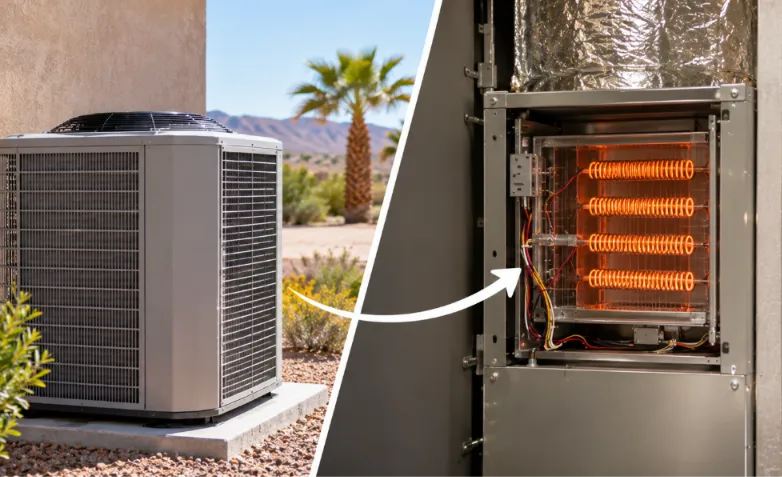
Aux heat means your heat pump has turned on its backup electric heat strips. They sit in the indoor air handler and help when the compressor alone can’t meet the thermostat’s demand. A heat pump normally heats your home by moving heat in from outdoor air, so the strips are the backup, not the main source.
Aux heat is not automatically a sign of a breakdown. It may operate briefly during a normal defrost cycle or when the thermostat needs to recover from a significant temperature setback. The concern is when the system depends on backup heat for long periods, particularly on mild days.
Because electric resistance heating uses substantial electricity, unnecessary aux operation can make winter heating more expensive. The goal is not to prevent aux heat from ever turning on. It is to make sure the compressor is doing as much of the heating work as the equipment and outdoor conditions allow.
Why Is Frequent Aux Heat Unusual During an Arizona Winter?
Frequent aux heat is unusual here because a Phoenix-area winter rarely gets cold enough to outpace a working heat pump. Sky Harbor averages fewer than one night a year at or below freezing, and its normal winter temperatures in NOAA’s 1991–2020 climate normals look like this:
| Month | Normal average high | Normal average low |
|---|---|---|
| December | 66.2°F | 45.3°F |
| January | 67.6°F | 46.0°F |
| February | 70.8°F | 49.0°F |
These are long-term monthly averages, not daily guarantees. Cold nights still happen, and your heat pump may need supplemental heat depending on its capacity and your home’s heating requirements. However, repeated aux operation during otherwise mild weather deserves a closer look.
The important distinction is how often and how long aux heat operates. A few minutes during defrost or a morning recovery period may be expected. If it stays on through much of the day, the thermostat or equipment may be relying on backup heat when the compressor should be handling the load.
What Are the Five Common Reasons a Heat Pump Keeps Switching to Aux Heat?
The five usual reasons are a long defrost cycle, a smart thermostat recovering from a big setback, low refrigerant, a weak compressor, and a wrong lockout or balance-point setting. The pattern, outdoor conditions, thermostat settings, and heating performance narrow down which one you have, starting with normal operation and moving toward equipment problems.
1. A Long or Repeated Defrost Cycle
What you notice: The AUX HEAT indicator appears while the outdoor unit is defrosting. You may also notice a temporary change in heating or steam rising from the outdoor unit.
Why it happens: During defrost, the heat pump temporarily stops delivering its usual heating output to clear frost from the outdoor coil. Auxiliary heat may operate to maintain indoor comfort. If defrost cycles run too frequently or last longer than they should, backup heat can remain active unnecessarily.
What a technician checks: The technician inspects the outdoor coil, defrost sensors, control board, and operating conditions to determine why the cycle is running too often or failing to finish properly. A normal heat pump defrost cycle clears the frost and hands heating back to the compressor on its own.
2. A Smart Thermostat Recovering From a Large Temperature Setback
What you notice: Aux heat appears early in the morning after the thermostat has been set several degrees lower overnight. It may turn off once the home reaches the scheduled temperature.
Why it happens: Some smart thermostats use auxiliary heat to reach the requested temperature by a scheduled time. A large overnight setback creates a bigger temperature difference, encouraging the thermostat to bring on backup heat instead of allowing the compressor more time to recover.
What a technician checks: The thermostat’s recovery settings, staging controls, temperature sensors, and programming are reviewed. Adjusting the schedule to avoid large overnight temperature changes may reduce unnecessary aux operation. If the thermostat needs reconfiguration, our programmable thermostat service in Tempe can help.
3. Low Refrigerant Reducing Heating Capacity
What you notice: The heat pump runs for long stretches, but the house does not warm up as expected. Aux heat appears more often because the compressor is not providing enough heating capacity.
Why it happens: A refrigerant leak can leave the system with an insufficient charge. Since refrigerant transfers heat through the system, an incorrect charge can reduce heating performance and cause the thermostat to call for supplemental heat.
What a technician checks: Refrigerant pressures, operating temperatures, and other performance readings are evaluated under the correct test conditions. If the charge is low, the technician should locate and address the leak rather than simply adding refrigerant and leaving the underlying problem unresolved.
4. A Weak or Underperforming Compressor
What you notice: The outdoor unit runs, but the heat pump struggles to maintain the indoor temperature. The AUX HEAT indicator appears frequently, even when the weather is not especially cold.
Why it happens: The compressor is responsible for circulating refrigerant and supporting the heat transfer process. If it is losing performance or has an electrical or mechanical problem, the system may not deliver enough heat to satisfy the thermostat.
What a technician checks: The technician evaluates compressor operation, electrical readings, refrigerant-side performance, and the associated components. This helps distinguish a compressor problem from a control, refrigerant, or electrical issue before recommending an expensive repair.
5. Incorrect Lockout or Balance-Point Settings
What you notice: Aux heat activates at outdoor temperatures when the compressor should normally be able to handle the heating demand. The pattern may repeat even when the system otherwise appears to operate normally.
Why it happens: Heat pump controls use settings that determine when the compressor operates and when auxiliary heat is allowed. If the auxiliary heat lockout, compressor lockout, or balance-point settings are incorrect, the system may bring on electric strips too readily or prevent the compressor from doing enough of the heating.
What a technician checks: The thermostat configuration, outdoor temperature sensor, equipment specifications, and actual heating capacity are reviewed together. The technician can then verify the correct settings for the installed system instead of applying an arbitrary temperature limit.
How Is Aux Heat Different From Emergency Heat?
Aux heat and emergency heat both involve electric resistance heating, but they serve different purposes. Aux heat is controlled automatically by the system when additional heating is needed. Emergency heat is a separate thermostat setting that generally disables the compressor and relies on the backup heat strips instead.
| Operating mode | How it works | When it is appropriate |
|---|---|---|
| Aux heat | Backup strips operate automatically when needed, according to system controls | Temporary heating support during defrost or a heating shortfall |
| Emergency heat | The compressor is generally bypassed, and electric backup heat provides the heating | A temporary fallback when the heat pump cannot operate |
The distinction matters because leaving emergency heat selected can make electric strips do all the heating instead of allowing the more efficient compressor to operate. If you notice the thermostat set to EM HEAT, check your equipment instructions before changing modes. If the compressor has stopped working or your home has no heat, arrange professional service rather than relying on emergency heat indefinitely.
How Can Aux Heat Affect Your SRP or APS Electric Bill?
Aux heat can push your SRP or APS bill up because heat strips turn electricity straight into heat, and a 10 kW strip uses 10 kWh for every hour it runs. At SRP’s Basic Plan winter price of 10.97 cents per kWh, that’s about $1.10 an hour. The extra usage shows up as higher kWh on your winter electric bill.
If your heat pump brings a high electric bill in winter, compare your current kWh with the same billing period last year. Focus on kWh rather than the dollar amount, because utility rates, billing periods, and plan changes can affect the total.
What to Compare on Your Electric Bill
- Total kWh used: Check whether electricity consumption increased compared with the same period last year.
- Number of billing days: Compare similar billing periods so a longer cycle does not distort the result.
- Daily usage patterns: Look for unusually high consumption on days when aux heat appears frequently.
- Thermostat habits: Consider whether you changed your heating schedule or indoor temperature.
- Utility rate plan: Check whether your SRP or APS plan or energy prices changed.
SRP customers can review their residential electricity price plans, while APS customers can review their current residential service plans. Both utilities offer different pricing structures, so the same kWh increase may affect customers differently.
Your monthly bill cannot prove that aux heat is the cause by itself. Other appliances, weather, and household usage also affect electricity consumption. However, an unexplained increase in winter kWh combined with frequent AUX HEAT indications is a good reason to have the system checked. Aux heat is one of several reasons an HVAC bill goes up, so rule out the others too.
What Can You Check Before Calling a Technician?
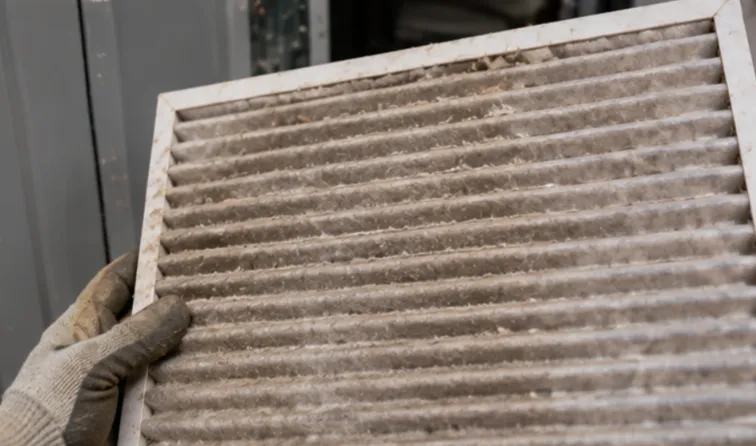
Check five things first: the thermostat mode, the schedule, the air filter, the vents, and the outdoor unit. None of them needs you to open the equipment or change installer-level settings.
- Check the thermostat mode: Make sure the system is set to HEAT rather than EM HEAT.
- Review the temperature schedule: Look for large overnight setbacks or sudden morning temperature increases.
- Inspect the air filter: Replace it if it is visibly dirty or clogged.
- Check supply and return vents: Move furniture, rugs, or other objects blocking airflow.
- Observe the outdoor unit: Look for visible ice buildup, debris, or anything restricting airflow. Do not remove panels or attempt internal repairs.
- Record when aux heat appears: Note the outdoor temperature, time of day, thermostat setting, and how long the indicator stays on.
If the system still relies on aux heat for hours on mild days, schedule a professional inspection. You should also arrange service if the home cannot reach the set temperature, the outdoor unit makes unusual noises, or your winter electricity usage rises unexpectedly. If the heat pump stops providing heat altogether, our emergency heating service in Tempe can help address the loss of heating.
A heat pump that blows cold air briefly during defrost is normal, while one that can’t hold the set temperature needs a technician.
How Can a Fall Heat Pump Tune-Up Prevent Aux Heat Problems?
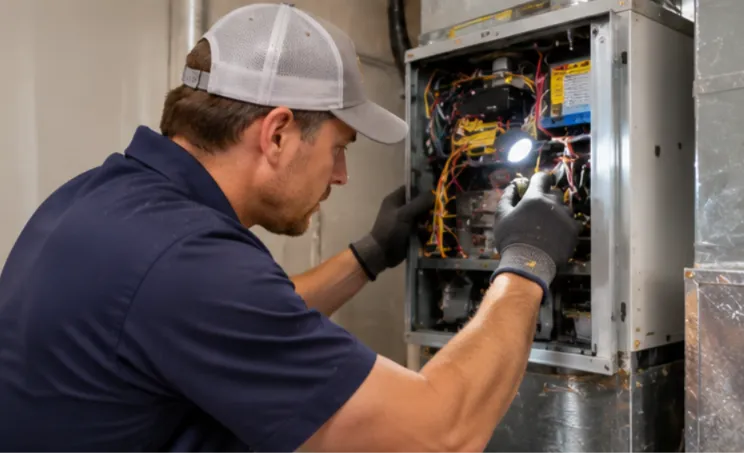
A fall tune-up gives a technician the opportunity to check the components and settings that affect winter heating before temperatures drop. It is particularly useful in the East Valley, where dust accumulation, thermostat programming, and equipment condition can all influence how often backup heat operates.
Our heat pump tune-up checks:
- Reversing valve and defrost control: Testing that the heat pump switches cleanly between heating and cooling and clears frost on time.
- Aux heat strips: Checking that the backup strips work and that the thermostat brings them on only when it should.
- Coils and filter: Cleaning the coil and filter so dirt doesn’t block heat transfer.
- Refrigerant and temperatures: Checking operating readings for signs of a low charge or a leak.
- Electrical parts and capacitor: Inspecting connections and testing the capacitor.
- Drain line and thermostat: Clearing the drain line and checking the thermostat’s staging and aux heat settings.
Maintenance cannot prevent every component failure, but it can identify developing issues before they leave the heat pump relying on backup heat. Scheduling heat pump maintenance in Tempe each fall prepares your system for winter, and our Accurate Advantage Club plan includes two tune-ups a year.
How Can Accurate Air Help With Heat Pump Aux Heat Problems?
If your heat pump keeps switching to aux heat during mild Arizona weather, replacing parts without identifying the cause can lead to unnecessary expense. The problem may involve thermostat programming, defrost operation, refrigerant performance, or a compressor that is no longer delivering enough heat. Each requires a different diagnostic approach.
Accurate Air is a family-owned company that has served Tempe and the East Valley since 1965. We check the thermostat and defrost controls, evaluate airflow, and take the measurements before recommending a repair. Our technicians are salaried, not on commission, so the repair we recommend is the one the readings point to.
If your AUX HEAT indicator keeps appearing and your winter electric usage is climbing, schedule a heat pump repair service in Tempe. We can help determine whether the issue is a setting or an equipment problem and explain the repair options. Call (602) 755-1528 to arrange service.
Frequently Asked Questions
Is It Bad for a Heat Pump to Run on Aux Heat?
Running on aux heat isn’t bad for a heat pump when it’s brief, like during defrost or on a cold morning. Hours of aux heat on mild days usually means a setting or part needs attention, and it pushes your electric use up.
Should I Turn Off Aux Heat on My Thermostat?
Turning off aux heat on your thermostat isn’t a good fix, because the strips also keep the house warm during defrost and on the coldest nights. If aux heat runs too often, have a technician find out why the system keeps calling for it.
Why Does My Heat Pump Switch to Aux Heat When It Is 50 Degrees Outside?
A heat pump switching to aux heat at 50 degrees usually points to a thermostat setback, a lockout setting, low refrigerant, or a weak compressor, because at 50 degrees a working heat pump should rarely need help.
Does Aux Heat Use More Electricity Than a Heat Pump?
Aux heat uses more electricity than a heat pump for the same warmth, because the strips turn each kWh straight into heat, while the heat pump moves extra heat in from outdoors. A 10 kW strip uses 10 kWh every hour it runs.