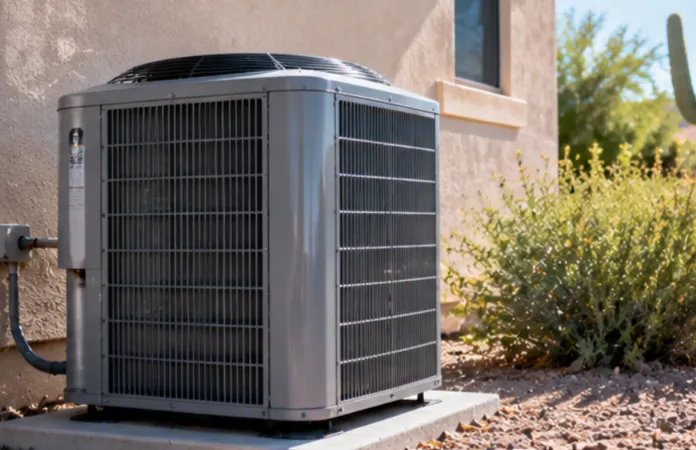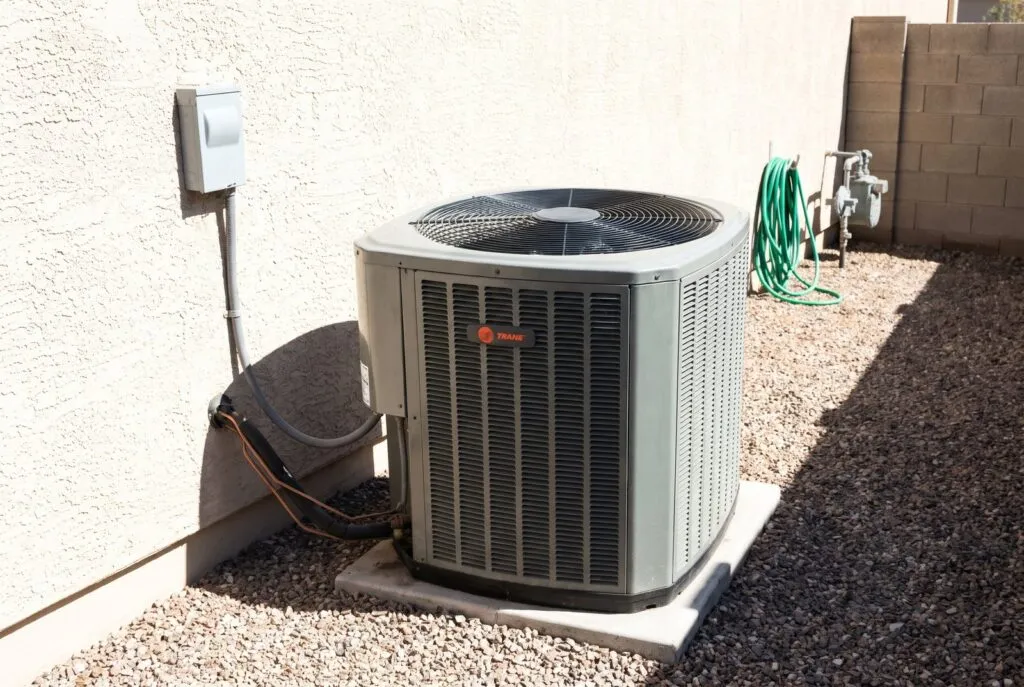
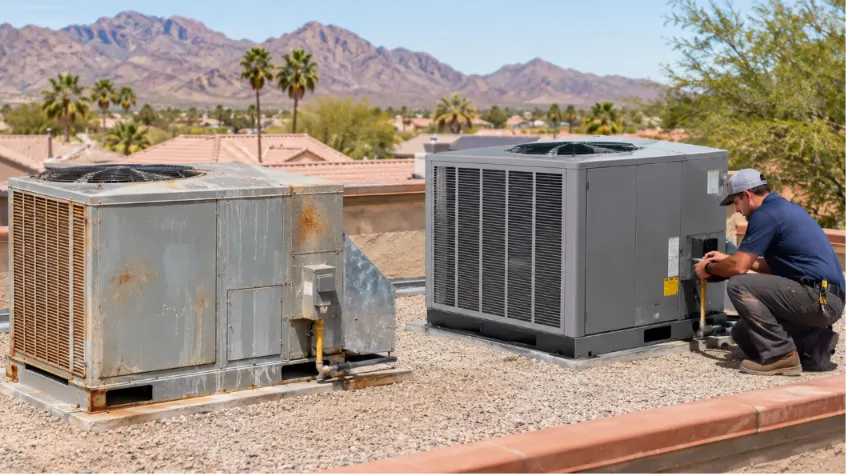
Replacing a gas pack with a heat pump package unit makes sense for many Tempe and East Valley homes, because one rooftop cabinet handles the long cooling season and our mild winters. Whether it suits yours depends on four things: your electrical panel, the gas line, the roof curb, and your HOA.
Your gas pack may have quit, or it may be old enough that another big repair doesn’t add up. You have three paths: another gas pack, an all-electric heat pump package unit, or a dual-fuel unit that keeps gas as backup.
What Is a Gas Pack, and What Replaces It?
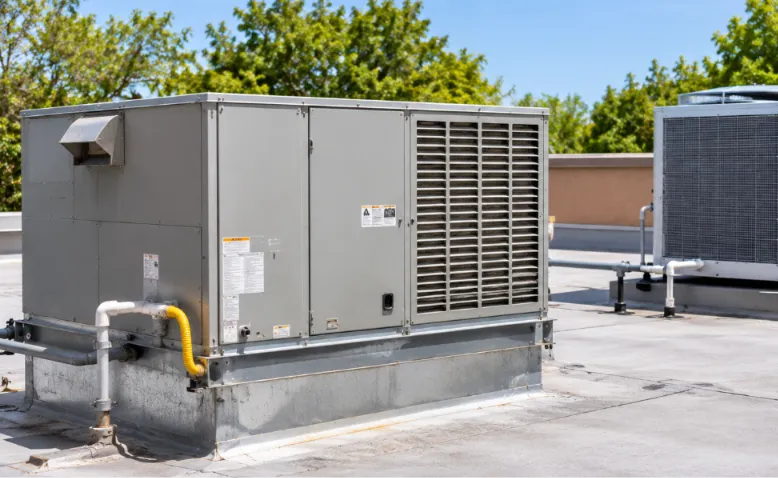
A gas pack is a packaged heating and cooling system installed in one outdoor cabinet, commonly on a rooftop. It contains an air conditioner, a gas furnace, and the blower that moves conditioned air through your home’s ductwork. During summer, the system cools your home with its compressor. During winter, the gas furnace provides heat.
A heat pump package unit uses a similar all-in-one cabinet, but it heats differently. Instead of burning natural gas, it reverses the refrigerant cycle to move heat from outdoor air into your home. In summer, it operates as an air conditioner. In winter, it provides heating, with electric resistance heat strips available as backup when needed.
The main difference is the heating source, not whether you still have air conditioning. Your replacement heat pump handles both jobs in one rooftop system. Our heat pump installation and replacement team in Tempe installs packaged rooftop heat pumps as well as split systems.
Why Does a Heat Pump Package Unit Make Sense in Arizona?
Phoenix needs about five times as much cooling as heating in a typical year: 4,765 cooling degree days to 874 heating degree days in NOAA’s 1991–2020 normals for Sky Harbor. So the heat pump’s main job is your air conditioning, and heating is the lighter one. A packaged heat pump handles both without relying on a gas furnace.
The compressor handles most heating when outdoor conditions are within the system’s operating range. On colder nights, the unit may use supplemental electric heat to help maintain indoor comfort. The amount of backup heat needed depends on the home’s heating load and the specific equipment selected.
A heat pump is not automatically the best choice for every home, but Arizona’s climate makes it worth comparing against another gas pack. Running one system all year is one of the main benefits of a heat pump in a cooling-first climate.
What Changes When You Replace a Gas Pack With a Heat Pump?
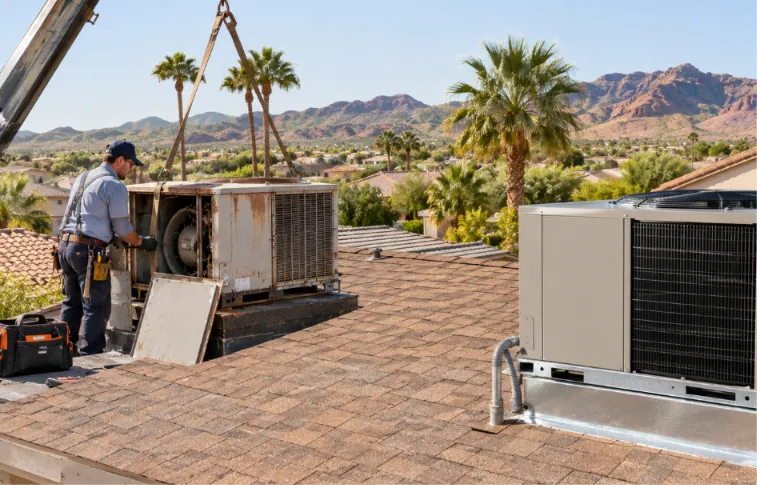
Five things change when you replace a gas pack with a heat pump. The gas line is capped, the panel carries more load, the heat strips need sizing, the curb may need an adapter, and your HOA may want a say.
The Gas Line and Southwest Gas Meter
An all-electric heat pump does not need the natural gas connection that previously supplied your rooftop furnace. The gas branch serving the old unit must be safely disconnected and capped as part of the conversion.
Before removing gas service, check whether other appliances still use it. Your water heater, range, clothes dryer, fireplace, or pool heater may depend on the same meter. If the gas pack is your only gas appliance, ask Southwest Gas about stopping service and whether meter removal is appropriate. Do not attempt to disconnect or cap gas piping yourself.
Electrical Panel Capacity and New Circuit Requirements
A gas furnace uses electricity for its controls and blower, but natural gas supplies the heat. An all-electric package heat pump adds a compressor and may also need substantial electrical capacity for its backup heat strips.
The installer should review the electrical panel, available breaker spaces, existing service load, wiring, and equipment specifications. A panel upgrade is not automatically required, but it may be necessary if the home’s existing electrical service cannot support the new equipment safely.
Heat Strip Sizing for East Valley Winter Nights
Heat strips are electric resistance heating elements that provide supplemental warmth when the heat pump needs additional capacity. Their size should be based on the home’s calculated heating load and the equipment manufacturer’s requirements, not simply on the size of the old gas furnace. East Valley nights rarely test them: Sky Harbor’s normal lows bottom out around 45°F in December and January, and nights at or below freezing average fewer than one a year.
For perspective, a 10 kW heat strip operating at 240 volts draws approximately 42 amps on its own. The complete system has additional electrical requirements, so the installer must use the equipment nameplate and electrical specifications to determine the correct circuit and protection.
Roof Curb Measurements and Crane Access
The roof curb is the raised mounting frame that supports the packaged unit and connects its supply and return openings to the home’s ductwork. A new heat pump cabinet may not match the old gas pack’s footprint, height, weight, or duct-opening arrangement.
Before ordering equipment, the installer should measure the existing curb and compare it with the replacement cabinet. A compatible curb may be reused. Otherwise, an adapter or replacement curb may be needed. Rooftop equipment also requires a planned crane lift, including access for the crane, a safe lifting path, and a suitable location for staging.
HOA Approval and Rooftop Equipment Rules
Some East Valley communities have restrictions on rooftop equipment appearance, screening, placement, height, or visibility from the street. A replacement cabinet that is taller or positioned differently may require approval even when the old gas pack was already permitted.
Review your HOA documents and obtain any required written approval before equipment is ordered. This avoids a situation where the new unit is ready for installation but its placement does not meet community requirements.
How Do the Operating Costs Compare Using Arizona Utility Rates?
Which system costs less to run depends on your rate plan and how often the heat strips run, so the fair comparison starts with your own electric and gas bills. A heat pump cuts your natural gas use, but that does not automatically mean every homeowner will save money.
On the electric side, SRP’s residential price plans list a Basic Plan winter energy price of 10.97 cents per kWh for November through April, so a 10 kW heat strip costs about $1.10 for every hour it runs. SRP’s time-of-use plans have different peak and off-peak prices.
Gas and electric rates are not a direct comparison of heating costs, because a therm of natural gas and a kWh of electricity deliver different amounts of usable heat. A fair estimate accounts for the gas furnace’s efficiency, the heat pump’s heating performance, and how often the strips run. Check your Southwest Gas bill for your own gas rate, and keep in mind that the monthly gas service charge stays if other appliances still use gas.
Tempe-area customers should check their own utility bills rather than assume a particular rate applies to every address. If your electric provider is APS, use its current residential rate schedules instead of SRP’s prices.
Is a Dual-Fuel Package Unit a Practical Middle Option?
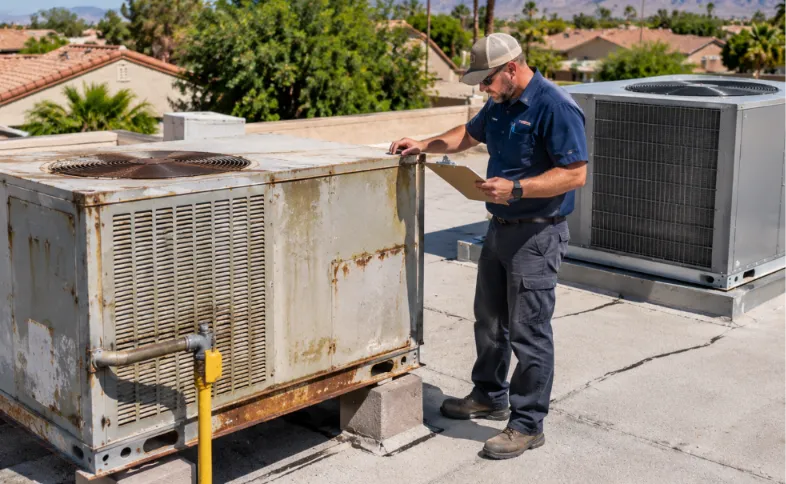
A dual-fuel package unit combines a heat pump with a gas furnace in one rooftop system. The heat pump handles cooling and most heating when outdoor conditions are suitable. When temperatures fall below a selected changeover point, the controls switch to gas heat instead of relying on electric resistance strips for supplemental heating.
This option keeps the gas connection in place, so it does not eliminate the gas service or its fixed charges. It also requires compatible equipment and controls that can manage both heating sources. For homeowners who want electric heat pump operation but prefer gas backup, it may be worth comparing with an all-electric replacement.
| Replacement option | Primary heating source | Main consideration |
|---|---|---|
| All-electric heat pump | Heat pump compressor, with electric strips for backup | Requires sufficient electrical capacity |
| Dual-fuel package unit | Heat pump with gas furnace backup | Retains gas service and requires compatible controls |
| New gas pack | Natural gas furnace | Closest replacement path when keeping gas is preferred |
If you’d rather keep gas heat, furnace installation and replacement in Tempe is the closest path, so compare its cost with the other two options. The upkeep differs too, because heat pump and furnace maintenance check different parts.
What Rebates Are Available for a Heat Pump Replacement in 2026?
SRP customers can still get a Cool Cash rebate on a qualifying heat pump in 2026, but the federal 25C tax credit no longer applies. The IRS guidance limits the Energy Efficient Home Improvement Credit to improvements made through December 31, 2025, so a 2026 installation doesn’t qualify.
SRP’s Cool Cash program pays $75 per ton for single-stage, $150 per ton for multi-stage, and $225 per ton for variable-capacity heat pumps, each rated 15.2 SEER2 or higher. The system has to be installed by April 30, 2027, and the rebate submitted within six months of installation.
The rebate section on our Brands We Serve page explains why the rebate follows the equipment’s efficiency rating, not the brand. Rebate programs can change, so verify the requirements with your utility before signing an installation agreement.
When Does Keeping Your Existing Gas Pack Make More Sense?
Keeping your gas pack makes more sense when it’s young, reliable, and needs only a reasonable repair. In that case, the repair may cost less than replacing the entire rooftop unit and changing the electrical or gas connections.
Consider keeping the gas pack for now when:
- The current unit is operating reliably and does not have a major recurring problem.
- The repair is reasonable compared with the cost of a complete replacement.
- Electrical upgrades would add substantial cost to an all-electric conversion.
- The existing roof curb or rooftop access makes the proposed replacement complicated.
- You prefer to keep natural gas for heating or other appliances.
The best decision comes from comparing the cost and expected performance of each option for your home. A replacement should solve an actual equipment problem or meet a clear comfort and efficiency goal, not simply change the fuel source.
How Does Accurate Air Help You Choose the Right Rooftop Replacement?
Replacing a rooftop gas pack is a good opportunity to correct sizing issues and compare different heating options. The new equipment should be selected using a load calculation for your home rather than automatically matching the old unit’s tonnage. This helps determine the cooling capacity, heating output, and backup heat requirements.
Accurate Air is a family-owned company that has served Tempe and the East Valley since 1965, and our technicians are salaried, not on commission. So the option we recommend is the one that fits your roof, panel, and budget, not the one that pays more.
If you want an assessment before choosing another gas pack or switching to a heat pump, call Accurate Air at (602) 755-1528. Our heating contractors in Tempe can help you plan a rooftop heat pump replacement around your home’s electrical, gas, and roof requirements.
Frequently Asked Questions
Can You Reuse the Existing Roof Curb When Replacing a Gas Pack?
You can reuse the existing roof curb when replacing a gas pack if the new unit’s footprint, duct openings, and weight match it. If they don’t, an adapter or new curb goes on first, so the curb is measured before equipment is ordered.
Do You Need an Electrical Panel Upgrade for a Heat Pump Package Unit?
A heat pump package unit doesn’t always need an electrical panel upgrade. It depends on the panel’s spare capacity, your other household loads, and the size of the heat strips, so the panel is checked before the replacement is final.
What Happens to the Existing Gas Line When You Install a Heat Pump?
The gas line to the old rooftop furnace is disconnected and capped when you install a heat pump. If your water heater, range, or dryer still uses gas, the meter stays. If nothing else does, ask Southwest Gas about stopping service.
Will a Heat Pump Keep Your Arizona Home Warm in Winter?
A heat pump will keep an Arizona home warm in winter when it’s sized for the house. Sky Harbor’s January normal low is 46°F, and freezing nights average fewer than one a year, so the heat strips mostly cover defrost and rare cold snaps.