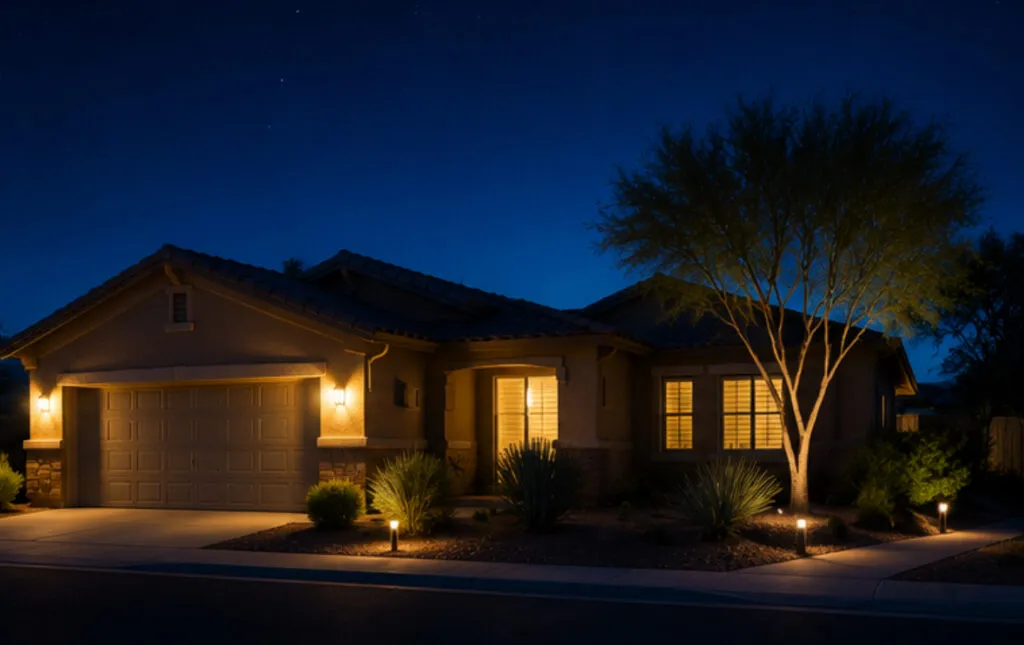
If your air conditioner cools your home quickly after sunset but struggles to keep up during the afternoon, you’re not imagining it. This is one of the most common concerns homeowners in Tempe have during the summer. When outdoor temperatures climb above 105°F, even a properly functioning AC system has to work much harder to remove heat from your home.
That doesn’t always mean your air conditioner is failing. In many cases, the difference between daytime and nighttime performance comes down to outdoor heat, attic temperatures, sun exposure, and how efficiently your HVAC system can reject heat. Understanding these factors can help you recognize when your AC is operating normally and when it’s time to schedule a professional inspection.
Why Does Your AC Cool Better After the Sun Goes Down?

Air conditioners don’t create cold air. Instead, they remove heat from inside your home and release it outdoors through the condenser unit. The cooler the outdoor air is, the easier it is for your system to transfer that heat outside.
After sunset, temperatures across Tempe begin to drop, reducing the workload on your outdoor unit. The condenser can release heat more efficiently, allowing your AC to cool your home faster and cycle off more frequently. That’s why many homeowners notice their home finally reaching the thermostat setting during the evening.
The opposite happens during the afternoon. As temperatures climb into the triple digits, the condenser has to push indoor heat into already scorching outdoor air. The system continues running, but its cooling capacity naturally decreases because heat rejection becomes much more difficult.
How Arizona’s Afternoon Heat Changes AC Performance
One of the biggest reasons your AC struggles during the afternoon is the dramatic increase in your home’s cooling load. As outdoor temperatures climb above 105°F, your roof, attic, exterior walls, windows, and even the concrete around your home continue absorbing solar heat. That stored heat gradually transfers indoors, forcing your air conditioner to remove far more heat at 3:00 PM than it did earlier in the morning.
Unlike nighttime, when outdoor temperatures begin dropping and heat gain slows, afternoon conditions continuously add heat faster than the AC can remove it. Even a properly operating system may run much longer because it’s fighting both the outdoor temperature and the accumulated heat stored throughout the home.
Why Does Your House Finally Cool Down at Night?

Once the sun sets, your home begins losing the heat it absorbed throughout the day. Roof surfaces cool, attic temperatures gradually fall, and less solar heat enters through windows and exterior walls. At the same time, outdoor air temperatures decrease, allowing the condenser to release heat much more efficiently. With both the home’s cooling load and the outdoor temperature dropping together, your air conditioner can finally catch up and reach the thermostat setting more easily.
What Makes Your Home Harder to Cool During the Day?
Several sources of heat work together during the day to increase the load on your air conditioner. In Tempe, it’s rarely just the outdoor temperature causing the problem. Solar heat entering through windows, attic temperatures exceeding 140°F, poor insulation, and warm outdoor air leaking into the home all force the AC to remove more heat before indoor comfort can be restored.
| Heat Source | How It Affects Your AC |
|---|---|
| Intense afternoon sun | Increases indoor temperatures by heating walls, windows, and roofing materials. |
| Hot attic spaces | Attic temperatures can exceed 140°F, allowing heat to radiate into living areas. |
| Poor attic insulation | Allows more heat to transfer through ceilings, forcing longer cooling cycles. |
| Air leaks around doors and windows | Lets hot outdoor air enter while allowing conditioned air to escape. |
| Heat-producing appliances | Ovens, dryers, and other appliances add extra heat inside the home during the day. |
When these heat sources combine with Tempe’s extreme outdoor temperatures, your AC simply has more work to do. If your system also has dirty coils, restricted airflow, or aging components, the difference between daytime and nighttime performance becomes even more noticeable.
How Dirty Condenser Coils Reduce Cooling During Hot Afternoons

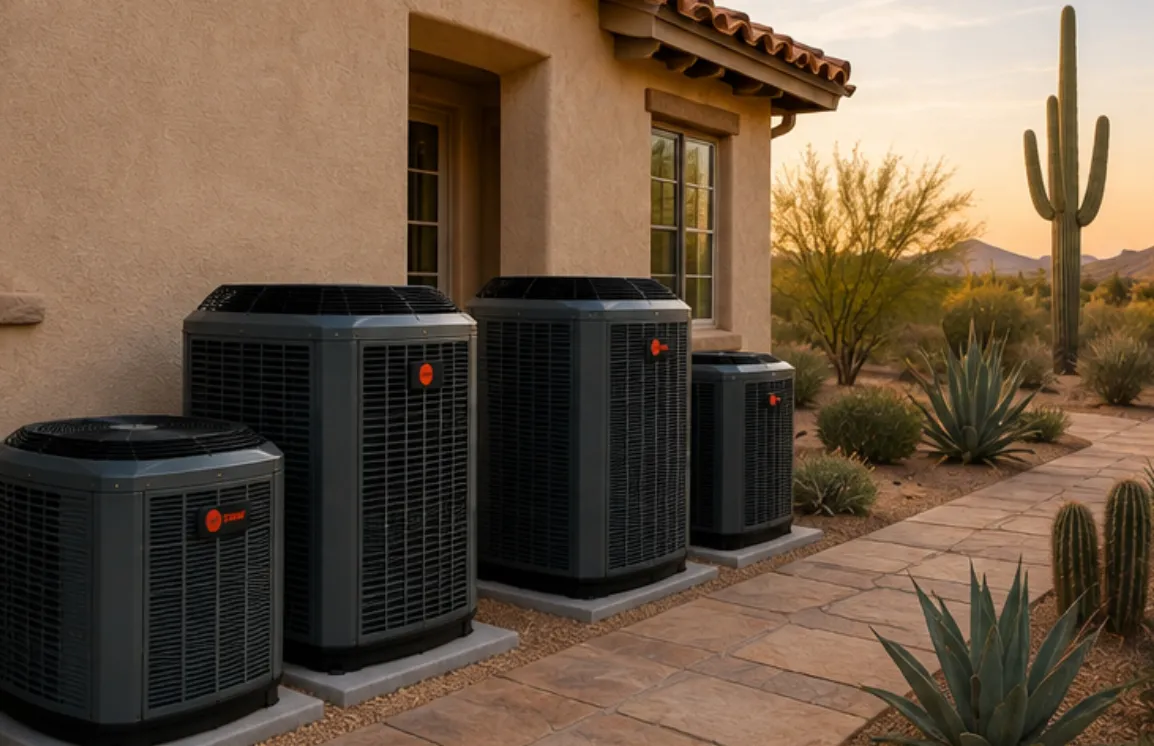
Your outdoor condenser is responsible for releasing the heat collected from inside your home. During Tempe’s triple-digit afternoons, that job becomes much harder because the condenser is already trying to reject heat into extremely hot outdoor air. If the coil is coated with dust, pollen, or desert debris, heat transfer becomes even less efficient.
As condenser performance declines, refrigerant temperatures and operating pressures increase, forcing the compressor to run longer while delivering less cooling indoors. This is why many homeowners notice their AC keeping up after sunset but struggling throughout the afternoon. Professional AC maintenance includes condenser coil cleaning to restore efficient heat rejection before Arizona’s hottest weather arrives.
Can an Older AC Lose Cooling Capacity in Extreme Heat?
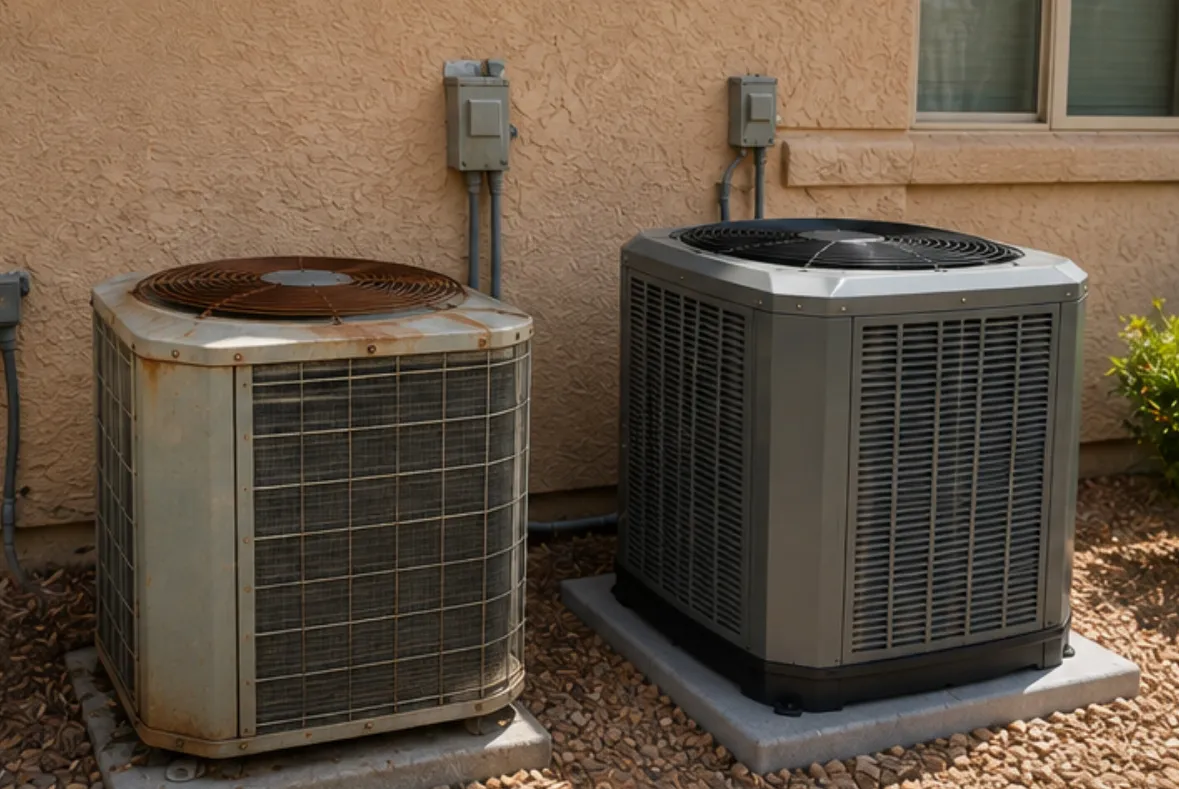
Yes, and it’s something HVAC technicians see regularly across Tempe. Even if an older air conditioner still runs every day, it may no longer deliver its original cooling capacity during periods of extreme heat. Years of wear gradually reduce efficiency, making it harder for the system to keep up when demand is at its highest.
Several components naturally lose performance as they age. The compressor may not move refrigerant as efficiently, the blower motor can deliver less airflow, and electrical components like capacitors weaken over time. These changes may go unnoticed during mild weather but become much more apparent when outdoor temperatures exceed 105°F.
If your AC is more than 12 to 15 years old and consistently struggles to maintain your thermostat setting during the afternoon, it may be time to have the system professionally evaluated.
How HVAC Technicians Determine Why Your AC Struggles During the Day
When an air conditioner cools well after sunset but struggles during the afternoon, experienced technicians evaluate much more than the equipment itself. They determine whether excessive heat load, poor condenser performance, attic heat, restricted airflow, or aging components are preventing the system from keeping up during Tempe’s hottest hours. This allows them to identify the root cause instead of treating only the symptom.
| HVAC Evaluation | Why It’s Important |
|---|---|
| Condenser coil inspection | Identifies dirt buildup that reduces heat rejection. |
| Refrigerant performance check | Confirms the system is operating within manufacturer specifications. |
| Airflow measurement | Verifies the correct amount of conditioned air is reaching the home. |
| Attic insulation assessment | Determines whether excessive heat gain is increasing the cooling load. |
| Electrical component testing | Detects worn capacitors, contactors, or motors affecting system performance. |
These AC inspections often uncover multiple small issues that together reduce daytime cooling. Correcting them can improve comfort, shorten cooling cycles, and help your AC perform more consistently throughout Tempe’s long summer season.
What Can You Do to Improve Daytime Cooling?
While Arizona’s extreme summer heat can’t be controlled, there are several ways to reduce the strain on your air conditioner. Improving airflow, minimizing heat gain, and keeping your HVAC system well-maintained can help it cool more effectively during Tempe’s hottest afternoons. Even small changes can make a noticeable difference in comfort and energy efficiency.
Replace Your Air Filter on Schedule
A dirty air filter is one of the most common reasons an AC struggles to keep up during the day. As dust accumulates, airflow becomes restricted, forcing the system to run longer to cool your home. Check your filter every month and replace it every 1 to 3 months, depending on the filter type, pets, and indoor air quality.
Keep the Outdoor Condenser Coil Clean
Your outdoor unit needs unrestricted airflow to release heat efficiently. Dust, leaves, and debris can build up on the condenser coil, especially after windy or dusty conditions in Tempe. Keeping the area around the unit clear and having the coil professionally cleaned during AC maintenance helps improve cooling performance.
Reduce Heat Gain Inside Your Home
Simple changes inside your home can reduce the amount of heat your air conditioner has to remove. Closing blinds or curtains during the afternoon, sealing gaps around doors and windows, and limiting the use of heat-producing appliances during peak hours can all help lower the indoor cooling load.
Improve Your Home’s Attic Insulation
A poorly insulated attic allows heat to transfer into your living space throughout the day. In many Tempe homes, attic temperatures can exceed 140°F, making it harder for the AC to maintain a comfortable indoor temperature. Improving attic insulation and sealing air leaks can reduce that heat transfer and improve overall comfort.
Schedule Professional HVAC Maintenance
Routine maintenance helps ensure every part of your cooling system is operating efficiently before the hottest weather arrives. During a tune-up, technicians inspect the condenser coil, refrigerant levels, electrical components, airflow, and other critical parts that affect daytime cooling performance. Catching small issues early often prevents larger repairs during the peak of summer.
If your air conditioner still cools well at night but struggles every afternoon after following these steps, it’s time to have the system professionally evaluated. Problems such as restricted airflow, low refrigerant, aging components, or excessive heat gain require the right tools and expertise to diagnose accurately.
Choosing an experienced HVAC contractor ensures you receive an honest assessment and the right solution, whether your system needs maintenance, a targeted repair, or a complete replacement.
Why Choose Accurate Air for AC Service in Tempe, AZ

If your air conditioner keeps up at night but struggles every afternoon, Accurate Air can help you find the reason. Our experienced technicians evaluate the entire cooling system, including condenser performance, airflow, refrigerant operation, and attic-related heat gain, so you’re not left guessing what’s causing the problem.
Since 1965, Accurate Air has provided trusted cooling solutions for homeowners throughout Tempe and the surrounding area. Whether your system needs routine AC maintenance, professional AC repair, or you’re considering an energy-efficient AC replacement, we’ll recommend the solution that’s right for your home and budget.
Don’t spend another Arizona summer wondering why your AC can’t keep up during the day. Contact Accurate Air to schedule a professional evaluation and keep your home comfortable, even when outdoor temperatures are at their highest.