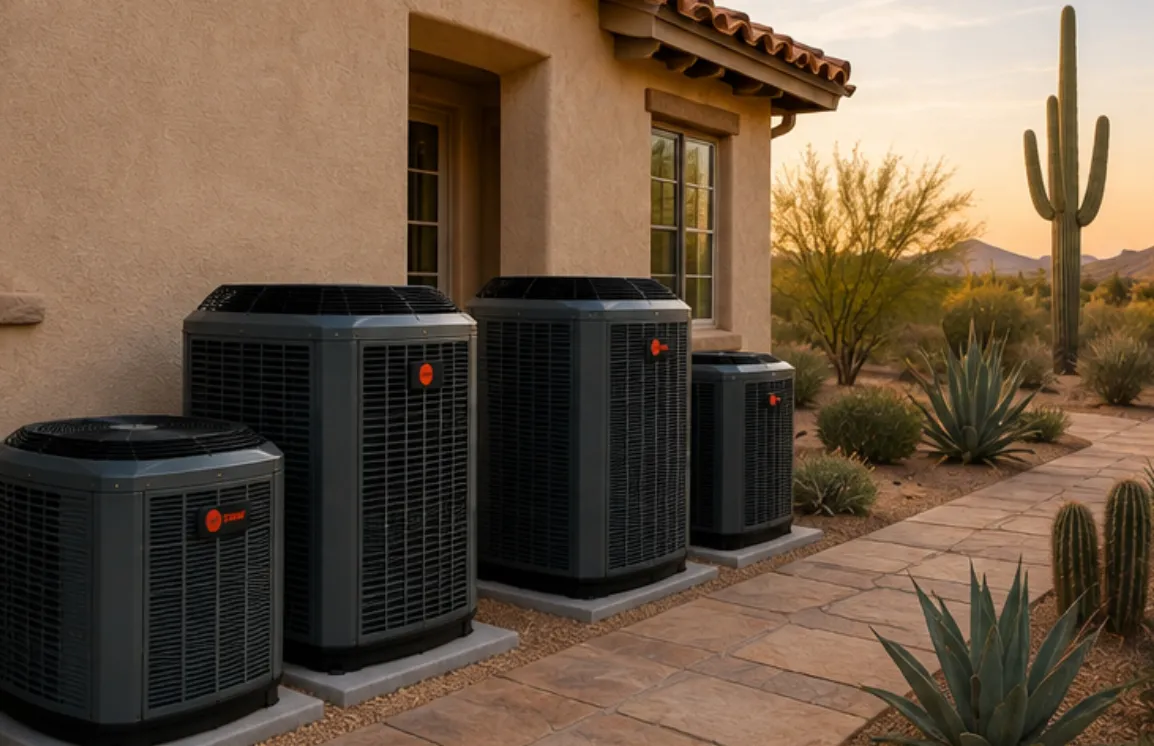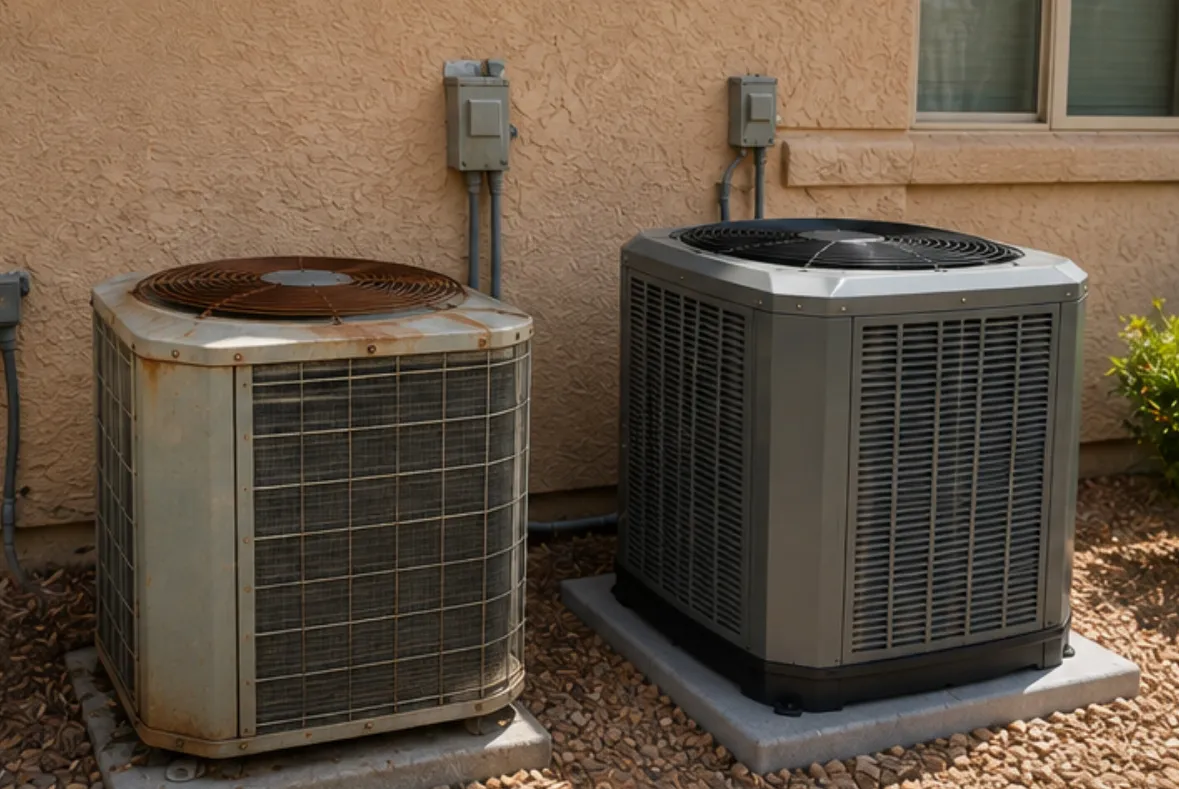
A heat pump is one of the most efficient ways to keep an Arizona home comfortable, but the desert is hard on it in ways most homeowners never see. The damage rarely arrives as a single dramatic failure. It builds slowly, as heat, dust, and sun wear on the system month after month until a part finally gives out, often on the hottest day of the year.
Understanding how the climate works against your equipment is the first step to staying ahead of it. This guide explains the specific ways Arizona’s desert conditions damage a heat pump, the signs to watch for, and how the right heat pump maintenance keeps the system running through both the heat and the mild winters.
Why Is the Desert So Hard on a Heat Pump?

A heat pump works harder in Arizona than almost anywhere else, partly because it does two jobs. It cools the home through brutal summers and heats it during cool desert nights and winters, so it runs across far more of the year than a system that only cools. That extra runtime alone adds wear, and the summer is where it shows most.
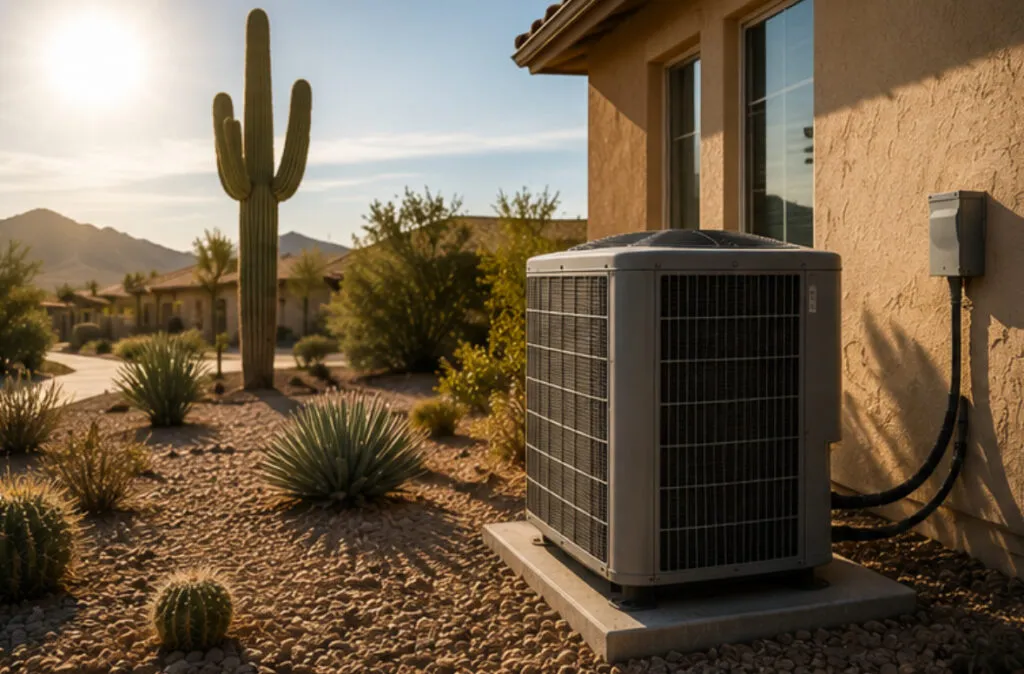
When afternoon temperatures pass 110 degrees, the outdoor unit struggles to release heat into the air that is already scorching, and the system runs long, hard cycles to keep up. Add constant dust and intense sun, and the desert quietly chips away at components that would last far longer in a milder climate. The result is a system that can look fine on the surface while wearing down underneath.
What Desert Conditions Actually Do to a Heat Pump
Arizona’s desert climate rarely damages a heat pump all at once. Instead, technicians often find multiple small issues that have been building for months. A capacitor weakened by extreme heat, a condenser coil coated in dust from repeated haboobs, or UV-damaged wiring exposed to years of direct sun may not cause immediate failure on their own. Together, however, they force the system to work harder every day until performance begins to suffer.
One of the most common patterns our HVAC technicians see in Mesa is a heat pump struggling to keep up during a heat wave, only for the inspection to reveal several climate-related issues working against it at the same time. The system may still be running, but airflow is restricted, operating pressures are elevated, and electrical components are already showing signs of stress.
| Desert Condition | How It Impacts the System |
|---|---|
| Triple-digit heat for weeks at a time | Forces longer cooling cycles and increases compressor strain |
| Dust storms and haboobs | Coat condenser coils and restrict heat transfer |
| Intense year-round UV exposure | Breaks down wiring insulation, plastics, and protective coatings |
| Monsoon dust followed by humidity | Creates buildup on coils and accelerates component wear |
| Near year-round system operation | Shortens the lifespan of motors, capacitors, and contactors |
The challenge is that most of this damage develops quietly. Homeowners often do not notice a problem until cooling performance drops, energy bills rise, or a component finally fails during the hottest part of the summer.
Which Heat Pump Components Fail Most Often in Arizona?

Not all parts wear at the same rate in the desert. During service calls across Tempe and Mesa, technicians often find the same handful of components showing signs of heat-related stress long before the rest of the system reaches the end of its lifespan.
| Component | How Arizona Conditions Affect It |
|---|---|
| Capacitor | Extreme heat shortens lifespan and weakens starting power |
| Condenser Fan Motor | Long summer runtimes accelerate wear |
| Contactor | Dust and electrical arcing create premature failure |
| Outdoor Coil | Dust buildup restricts heat transfer |
| Electrical Wiring | UV exposure can dry and crack insulation over time |
Most of these components show warning signs before complete failure, which is why routine inspections often prevent emergency breakdowns during the hottest months of the year.
How Dust and Heat Wear the System Down
Dust is the desert’s quietest threat. Fine, blowing dust settles on the outdoor coil and packs into filters, and as airflow drops, the system runs longer and hotter to move the same air. A coil caked after a dust storm cannot release heat efficiently, which raises operating pressures and puts steady strain on the compressor, the most expensive component to replace.
In Arizona, one of the most common service calls after dust storms involves heat pumps struggling to cool because the outdoor coil has become coated with fine dust and debris. Homeowners often assume the equipment is failing when the real issue is restricted airflow, forcing the system to work harder than necessary.
Heat creates another layer of stress. Capacitors, contactors, fan motors, and compressors all operate under higher temperatures for longer periods than they would in most parts of the country. Over time, that constant strain shortens component life and increases the likelihood of mid-summer breakdowns.
How Sun and Monsoon Season Add Hidden Damage
The Arizona sun does more than heat the air. Constant UV exposure slowly breaks down the materials on the outdoor unit, drying out wiring insulation, fading and cracking plastic components, and degrading the protective finish on the cabinet. These are not dramatic failures, but over the years they create the brittle wires and worn parts that eventually cause electrical problems.
Monsoon season brings its own mix. A sudden dust storm can cake the coil in a single afternoon, while the moisture and humidity that follow combine with that dust to corrode and foul components. Monsoon storms also bring power surges that stress the heat pump’s electrical parts and controls. Each event is brief, but the cumulative effect on an outdoor unit that lives fully exposed to the elements is real.
What Are the Signs the Desert Is Catching Up With Your Heat Pump?

Because desert damage builds gradually, the early signs are easy to dismiss until the system finally struggles. Paying attention to these changes lets you address wear before it turns into a failure:
- Weaker Cooling: The home takes longer to reach temperature on hot afternoons.
- Longer Run Times: The system rarely cycles off during the heat of the day.
- Rising Energy Bills: Energy use climbs on your APS or SRP statement with no change in habits.
- Strange Noises: Buzzing, humming, or clicking often points to tired electrical parts.
- Frequent AC Repairs: Several issues in one season suggest accumulated wear.
Any one of these is worth a closer look. Several together usually mean the climate has been quietly wearing on the system, and it should be evaluated before peak demand.
How Do You Protect a Heat Pump in the Arizona Desert?
While Arizona’s climate is tough on heat pumps, most desert-related damage can be minimized with consistent maintenance. The goal is not just keeping the system running today, but preventing the heat, dust, and sun from gradually shortening its lifespan. Small maintenance tasks performed throughout the year often prevent the costly repairs that show up during the hottest weeks of summer.
A few of the most important steps include:
- Check Filters Monthly: Desert dust loads filters quickly and restricts airflow if left unchanged.
- Rinse the Outdoor Coil After Dust Storms: Removing accumulated dust helps the system release heat more efficiently.
- Keep the Outdoor Unit Clear: Leaves, debris, and vegetation reduce airflow around the heat pump.
- Watch for Performance Changes: Longer run times, weaker cooling, or rising energy bills often signal developing issues.
- Schedule Seasonal Maintenance: Professional inspections catch worn components before they fail under extreme summer demand.
During a professional tune-up, technicians inspect coils, electrical components, refrigerant levels, motors, and UV-exposed wiring to identify problems early. Addressing those issues before peak summer temperatures arrive is one of the most effective ways to protect both system performance and equipment life.
How Often Should a Desert Heat Pump Be Serviced?
Manufacturer maintenance schedules are written for average conditions, and Arizona is not average. Because the system runs much of the year and faces heat, dust, and sun that milder regions never see, it benefits from a more frequent routine.
Most desert heat pumps do best with a professional tune-up at least once a year, and many homeowners schedule two, one before cooling season and one before the heating months, so the system is checked ahead of each demanding stretch.
Between visits, the filter deserves a look every 30 days during the dust and monsoon season, and the outdoor unit benefits from a rinse after major storms. That cadence keeps dust from accumulating, catches worn electrical parts before they fail, and gives the equipment its best chance at reaching a full service life despite the climate.
Why Choose Accurate Air for Heat Pump Service in Tempe and Mesa, AZ

Arizona’s heat, dust, UV exposure, and monsoon storms can slowly wear down a heat pump long before a major breakdown occurs. Longer run times, rising energy bills, and weaker cooling are often early signs that the desert is taking its toll.
Since 1965, Accurate Air has helped Tempe and Mesa homeowners stay ahead of those issues with professional heat pump maintenance, inspections, and repairs. If your system is struggling, timely heat pump repair can prevent further damage, while an aging unit may benefit more from a new heat pump installation. Schedule an evaluation to keep your system running efficiently through Arizona’s toughest weather.