
When your air conditioner starts blowing warm air during Mesa’s intense summer heat, it can feel frustrating and even stressful. You expect your system to keep your home cool and comfortable, especially when outdoor temperatures stay above 100°F for days at a time. Instead, you might notice longer cooling cycles, rising energy bills, or rooms that never seem to reach the right temperature.
Before assuming the worst, it’s important to understand that several common issues can cause warm airflow. Identifying the real cause early can help prevent discomfort and avoid more expensive repairs later.
Many homeowners first notice cooling problems during peak afternoon heat when the system is already working at maximum capacity. Small performance issues that went unnoticed in spring can suddenly become more obvious once cooling demand increases. Understanding what may be affecting your system’s performance is the first step toward restoring reliable indoor comfort.
Thermostat Settings and Simple Power Issues That Affect Cooling

If your AC suddenly begins blowing warm air, one of the first areas to check is your thermostat and system power supply. Incorrect thermostat settings or minor electrical interruptions can prevent your system from entering a full cooling cycle.
In Mesa homes, power fluctuations during heavy summer usage can also contribute to temporary cooling problems. These simple issues are often overlooked but can significantly impact system performance.
Common thermostat or power-related causes include:
- Thermostat set to fan mode instead of cooling mode
- Temperature setting higher than actual indoor temperature
- Dead thermostat batteries affecting signal communication
- Tripped circuit breakers following power surges
- Outdoor disconnect switch accidentally turned off
If these quick checks do not restore proper cooling, the issue may be related to airflow restrictions or internal system performance. Many homeowners find that persistent cooling concerns improve after scheduling professional AC repair, which helps identify and resolve hidden problems before peak summer strain begins.
Airflow Restrictions That Reduce Cooling Performance

When airflow becomes restricted, your air conditioner may continue running but struggle to deliver properly cooled air throughout the home.
In Mesa’s dry desert environment, dust buildup and clogged filters are common causes of reduced airflow. You might notice weaker air from vents, uneven room temperatures, or longer cooling cycles as the system works harder to maintain comfort. These issues can gradually increase energy usage and reduce overall efficiency.
Typical airflow problems that contribute to warm air include:
- Dirty air filters limiting circulation and cooling capacity
- Blocked supply vents preventing conditioned air distribution
- Dust accumulation on return grilles restricting airflow balance
- Leaky ductwork allowing cooled air to escape into attic spaces
- Flexible ducts bent or crushed reducing system performance
Improving airflow often helps restore more consistent cooling, but if performance issues continue, deeper mechanical concerns, such as refrigerant problems, may be affecting your system. If these issues persist, don’t hesitate to call our reliable HVAC contractors in Mesa, AZ
Low Refrigerant Levels and Cooling Capacity Loss
Refrigerant plays a critical role in removing heat from your home, and when levels drop, cooling performance can decline quickly. Low refrigerant can occur due to leaks, improper system charging, or gradual wear over time.
In Mesa’s extreme heat, even small refrigerant issues can make your system struggle to maintain comfortable indoor temperatures. You may notice longer runtime, warm airflow during peak hours, or rising electricity costs as the system compensates.
Signs that refrigerant problems may be affecting your cooling include:
- AC running continuously without reaching thermostat set temperature
- Ice buildup on indoor evaporator coils
- Hissing or bubbling sounds near refrigerant lines
- Reduced cooling strength from supply vents
- Higher energy bills without changes in thermostat usage
Addressing refrigerant concerns early can help prevent compressor strain and avoid more costly repairs.
Many homeowners choose to enroll in a seasonal maintenance plan to monitor system performance regularly and reduce the risk of unexpected cooling failures during Mesa’s hottest months.
Outdoor Condenser Problems That Can Cause Warm Air
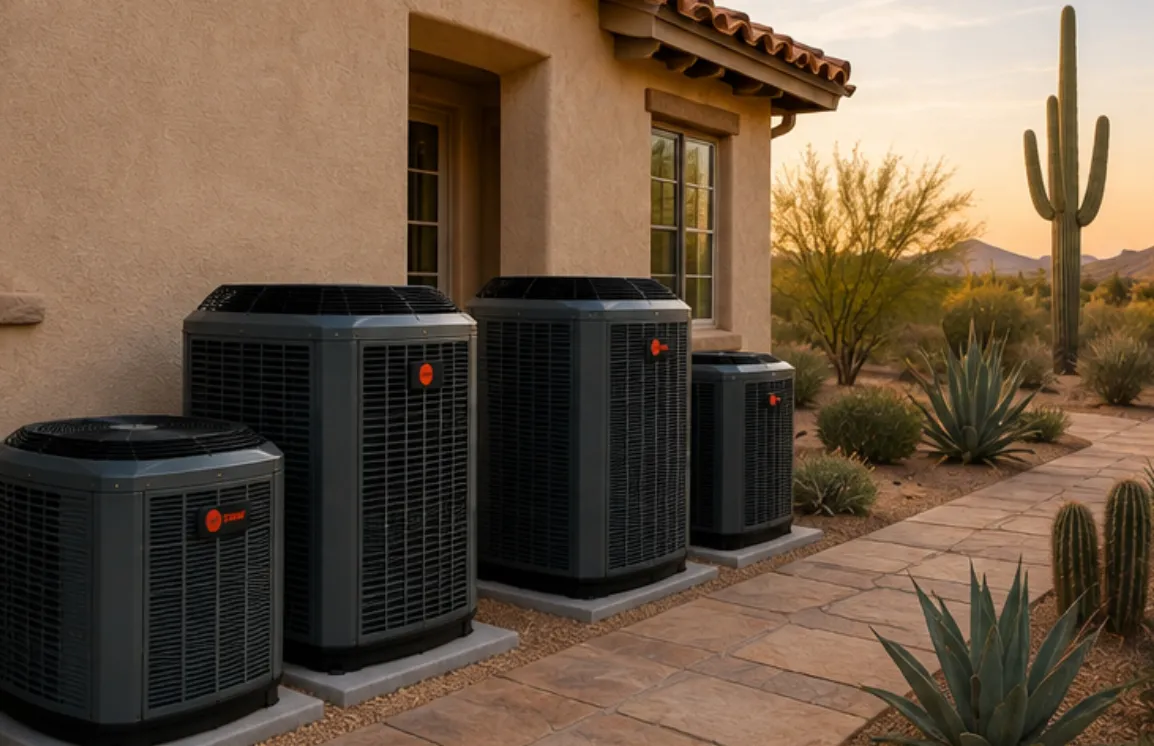
If your AC seems to be running but the air inside still feels warm, the problem may be related to the outdoor condenser unit. In Mesa’s intense summer climate, constant sun exposure, dust accumulation, and restricted airflow can reduce how effectively the system releases heat.
When heat transfer becomes inefficient, cooling performance can drop quickly even if the indoor unit appears to be functioning normally.
Common outdoor unit issues that can affect cooling include:
- Debris Blockage – Dirt and leaves restrict airflow through condenser coils.
- Fan Motor Wear – Reduced fan speed limits proper heat removal.
- Bent Coil Fins – Damaged fins decrease overall heat transfer efficiency.
- Overheating Shutdowns – High temperatures trigger protective system cycling.
- Electrical Disconnect Problems – Power interruptions prevent outdoor unit operation.
When condenser performance declines, the system may struggle to maintain cooling even during moderate temperature periods. As these external issues develop, internal electrical components may also begin experiencing increased operational stress. These problems signal the need to book a service with your trusted air conditioning technician in Mesa, AZ.
Electrical Component Wear That Affects Cooling Operation
During Mesa’s prolonged cooling season, electrical parts inside your AC system must support extended runtimes and repeated startup cycles. Over time, this continuous demand can lead to gradual wear in components responsible for delivering stable power to the compressor and fan motors. When electrical performance becomes inconsistent, cooling cycles may weaken or fail to complete properly.
Electrical concerns that can impact cooling performance include:
- Weak Capacitors – Insufficient electrical support delays compressor startup.
- Worn Contactors – Damaged connections interrupt consistent cooling cycles.
- Loose Wiring – Intermittent power flow reduces system reliability.
- Tripped Safety Switches – Protective shutdowns occur during overheating conditions.
- Voltage Fluctuations – Inconsistent power supply affects cooling stability.
As electrical wear increases, systems may require longer runtimes to reach desired temperatures. This additional strain can highlight efficiency limitations that are more noticeable in older cooling equipment.
Aging AC Systems and Reduced Cooling Efficiency
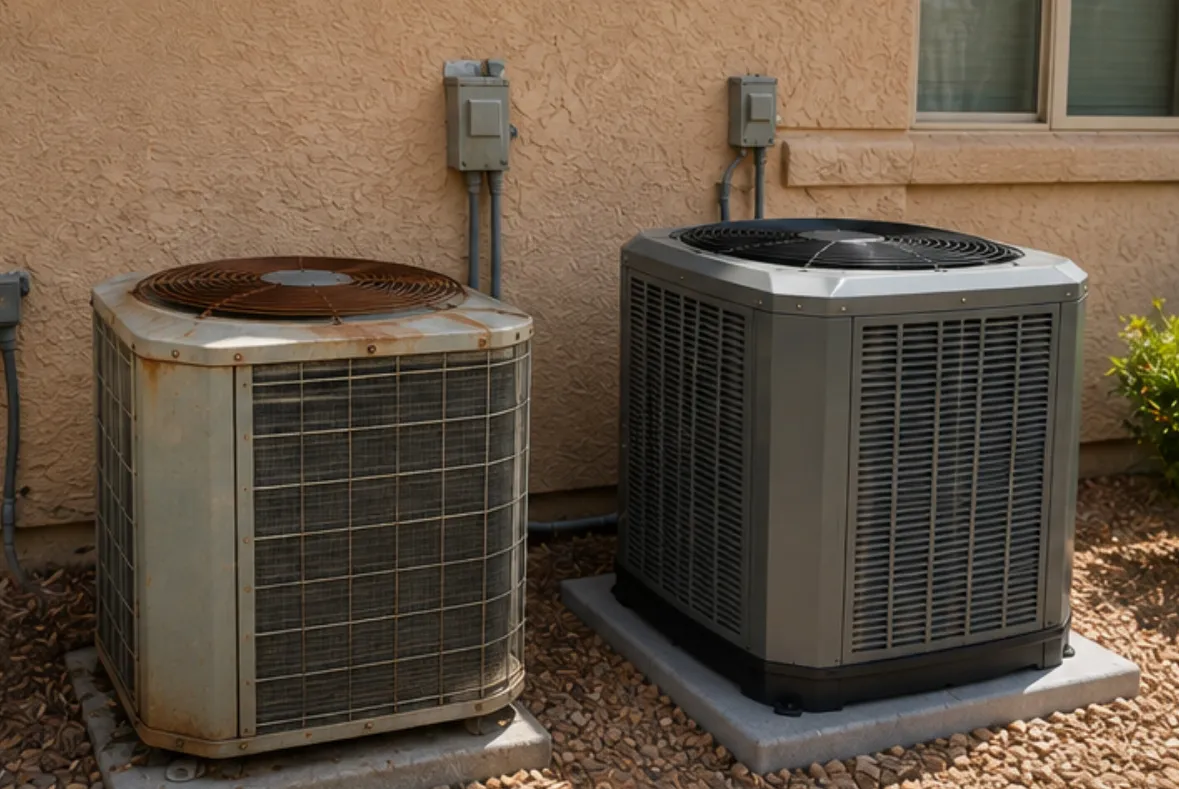
If your air conditioner has been operating for many years, gradual performance decline may begin affecting how effectively it cools your home. Components naturally wear down with prolonged use, especially in regions like Mesa, where cooling demand remains high for much of the year. This can result in longer cooling cycles, uneven comfort, and higher energy consumption over time.
Signs that an aging system may be losing efficiency include:
- Extended Cooling Cycles – System runs longer to achieve thermostat settings.
- Uneven Room Comfort – Temperature differences develop across living spaces.
- Frequent Minor Repairs – Older parts require replacement more often.
- Reduced Airflow Strength – Cooling output feels weaker from vents.
- Rising Energy Usage – Utility costs increase despite normal thermostat habits.
As efficiency declines, homeowners may begin noticing more noticeable comfort disruptions during peak heat periods. In these situations, understanding when performance concerns require professional evaluation becomes especially important.
DIY Checks You Can Try When Your AC Blows Warm Air
Before assuming there’s a major system failure, there are several simple troubleshooting steps you can take that may help restore cooling performance. In many Mesa homes, warm air issues are sometimes linked to basic airflow restrictions, thermostat settings, or outdoor unit conditions. Taking a few minutes to check these areas can help you rule out minor problems and better understand whether professional AC repair may be needed next.
| DIY Step | What to Check | Why It Matters |
|---|---|---|
| Thermostat Settings | Ensure system is set to cool mode and temperature is lower than room temperature | Incorrect settings can prevent proper cooling cycles |
| Air Filter Condition | Replace dirty or clogged filters | Restricted airflow reduces cooling efficiency and comfort |
| Supply Vent Clearance | Remove furniture or obstructions near vents | Blocked vents limit air distribution across rooms |
| Outdoor Unit Area | Clear debris, leaves, or dust around condenser | Improves heat release and system performance |
| Circuit Breaker Check | Confirm AC breakers are fully switched on | Power interruptions can stop cooling operation |
| Return Air Grilles | Clean dust buildup on intake vents | Supports better airflow balance and circulation |
If cooling performance does not improve after these checks, the issue may be related to deeper mechanical or refrigerant concerns. This is often the right time to consider a detailed inspection from a qualified HVAC professional.
When Warm Air Means It’s Time to Call a HVAC Professional

Sometimes warm airflow continues even after checking thermostat settings, airflow pathways, and outdoor unit conditions. This may indicate deeper mechanical or performance-related concerns that are not easily visible. Ignoring persistent cooling issues can lead to increased strain on major components and higher repair costs later in the season.
Warning signs that may indicate the need for professional inspection include:
- Continuous Warm Airflow – Cooling does not improve after basic troubleshooting.
- Frequent System Cycling – AC turns on and off without stabilizing temperature.
- Unusual Equipment Noises – Grinding or buzzing suggests internal wear.
- Ice or Moisture Formation – Visible buildup signals performance imbalance.
- Sudden Utility Spikes – Energy costs rise without thermostat changes.
Recognizing these warning signs early can help you avoid more serious cooling failures and costly system damage. Taking timely action also gives you the opportunity to choose a trusted HVAC technician in Mesa who can properly diagnose the issue and recommend effective AC repair solutions. Working with an experienced local professional helps improve system reliability, restore consistent indoor comfort, and keep your cooling performance stable during extended periods of extreme summer heat.
Why Choose Accurate Air for AC Repair in Mesa, AZ

When your AC starts blowing warm air during Mesa’s intense summer heat, working with an HVAC team that understands local climate demands can help restore comfort faster. Accurate Air focuses on thorough diagnostics, reliable repairs, and practical solutions that address the real cause of cooling problems. If your system is struggling to keep up with high temperatures, scheduling professional air conditioner repair services or routine AC maintenance can help improve efficiency and support more dependable indoor comfort throughout the season.